Every advocacy organization knows the feeling.
A bill suddenly gains traction. A committee hearing appears on the calendar. A vote window opens faster than expected. Leadership asks the communications team to mobilize supporters immediately.
And suddenly the question becomes: “Can we reach people right now?”
The organizations that succeed in these moments rarely build their texting programs during the crisis. They build them months before the legislative fight escalates.
March is that preparation window. Smart advocacy teams use this time to establish infrastructure, compliance, and audience readiness so that when Q2 legislative pushes arrive, texting becomes a strategic advantage instead of an operational scramble.
An effective advocacy text messaging strategy is not built when urgency hits. It is built when there is still time to prepare.
Why March Matters for Advocacy Text Messaging Strategy
Most state legislative calendars begin accelerating in late spring and early summer. Committee activity increases, amendments move quickly, and advocacy organizations often have only hours or days to mobilize supporters.
When advocacy teams wait until those moments to activate texting, several problems appear:
- Carrier registration delays slow down new numbers
- Audience lists have not been properly consented or segmented
- Messaging workflows are untested
- Reply management becomes overwhelming
- Deliverability suffers because trust with carriers has not been established
These challenges are not technical problems. They are timing problems.
March is the month when disciplined organizations pressure-test their communications infrastructure so that texting is ready when legislative pressure begins to build.
Step 1: Establish a Scalable Texting Infrastructure
Before any advocacy campaign begins, organizations need a texting platform that can handle sudden volume increases without triggering carrier filtering.
Many advocacy campaigns underestimate how quickly outreach can expand. A policy vote that affects multiple states or industries can require hundreds of thousands of messages within hours.
A scalable advocacy texting program should include:
- Registered sending numbers with carriers
- Verified campaign use cases and compliance documentation
- Message throughput capable of rapid deployment
- Deliverability monitoring to prevent silent filtering
Infrastructure decisions determine whether messages reach supporters during the moment that matters most.
If your texting program is still being assembled while legislation is moving, you are already behind.
Step 2: Build and Segment Your Advocacy Audience
Text messaging is powerful because it reaches people instantly, but only if the audience has already opted in.
March is the ideal time to grow and organize supporter lists so they can be activated when policy windows open.
Strong advocacy text messaging strategy focuses on audience structure, not just audience size.
Advocacy organizations should prioritize:
- Confirming SMS consent for existing supporter databases
- Segmenting contacts by geography, district, or issue interest
- Identifying high-engagement supporters who respond frequently
- Connecting texting audiences with CRM or voter/constituent data
When legislative alerts are sent, segmented lists allow organizations to target the right supporters in the right districts rather than sending generic blasts.
This dramatically increases response rates and policy impact.
Step 3: Prepare Rapid Mobilization Workflows
Legislative advocacy rarely moves at a predictable pace.
A committee hearing might be scheduled with only 24 hours notice. A vote could be moved up unexpectedly. Amendments may change the messaging needed for supporter outreach.
Advocacy organizations should use March to design rapid response texting workflows, including:
- Pre-approved message templates for common advocacy actions
- Automated links for contacting lawmakers
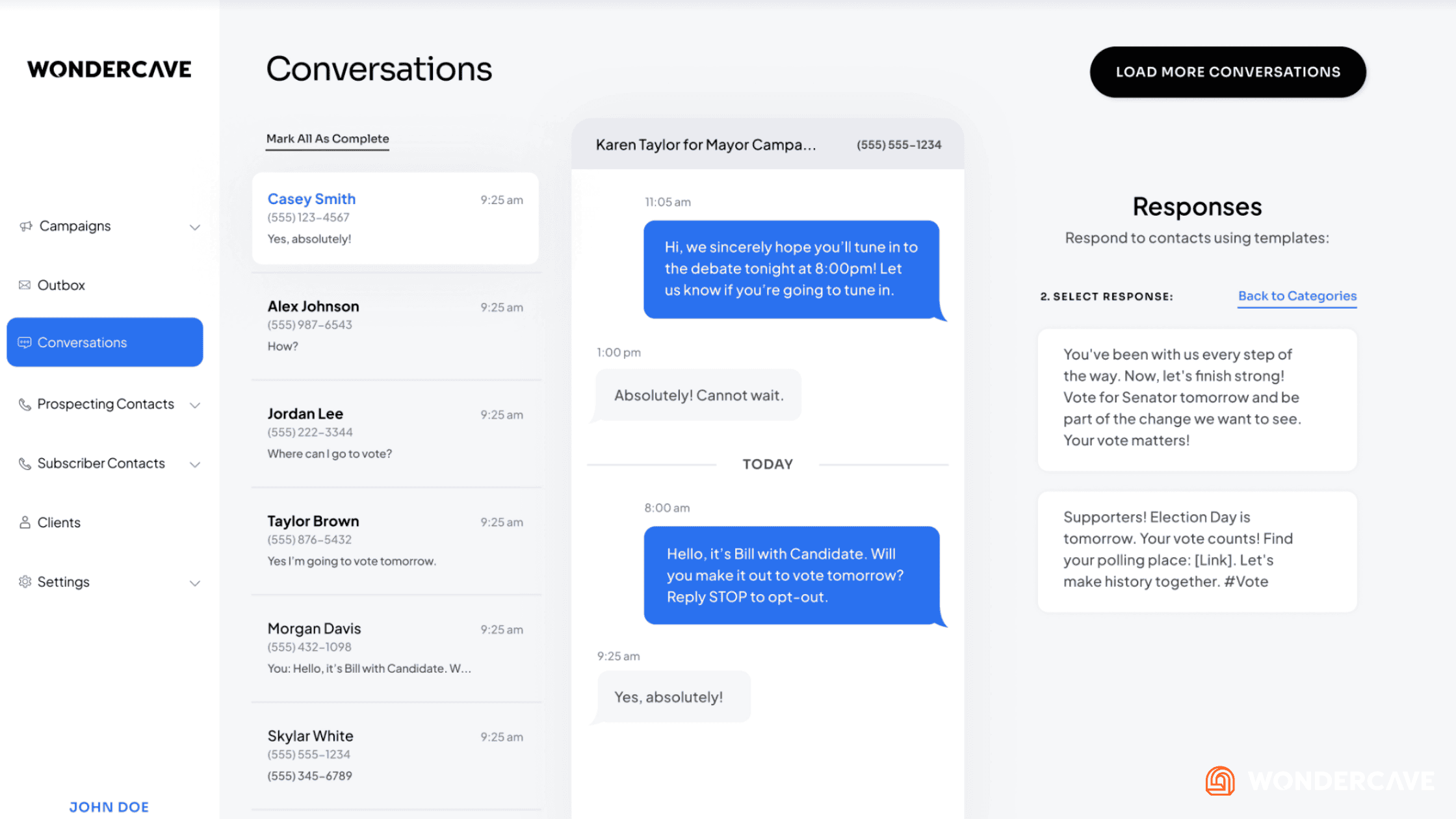
- Escalation flows when supporters respond with questions
- Staff assignments for monitoring inbound messages
The goal is simple: reduce decision time during the legislative moment.
When workflows are prepared in advance, teams can move from awareness to mobilization in minutes instead of hours.
Step 4: Train Teams for Two-Way Advocacy Conversations
Text messaging works best for advocacy when it enables real conversations.
Supporters often want to ask questions before taking action. They may want clarification about legislation, instructions for contacting lawmakers, or reassurance that their participation matters.
Organizations that prepare their teams for two-way engagement see stronger results because conversation builds trust.
Before legislative activity accelerates, advocacy groups should train staff on:
- Responding to supporter questions quickly
- Handling common objections or confusion about policy issues
- Maintaining compliance while engaging in conversation
- Escalating complex inquiries to policy experts when needed
When supporters feel heard, they are far more likely to complete actions such as calling legislators, submitting public comments, or attending hearings.
Two-way texting turns passive supporters into active participants.
Step 5: Test Deliverability Before Urgency Hits
One of the most dangerous problems in advocacy texting is silent filtering.
Messages appear to send successfully but never reach supporters because carriers have flagged a campaign’s sending behavior.
This often happens when organizations suddenly scale message volume without building prior trust.
March is the ideal time to run smaller engagement campaigns that establish a positive sending reputation with carriers.
Advocacy teams should test:
- Message formatting and link behavior
- Audience engagement patterns
- Delivery performance across different carriers
- Opt-out and compliance handling
When the legislative moment arrives, this reputation helps ensure that large-scale mobilization messages actually reach supporters.
The Organizations That Win Legislative Fights Prepare Early
Advocacy campaigns are rarely won through a single message.
They are won through consistent infrastructure, prepared audiences, and rapid mobilization when policy windows open.
Organizations that build their advocacy text messaging strategy in March gain a major operational advantage:
- Their audiences are already consented and segmented
- Their messaging workflows are tested
- Their teams are trained for supporter conversations
- Their infrastructure can scale instantly when legislation moves
When Q2 legislative fights escalate, these organizations are not scrambling to launch a texting program.
They are already using it.
And that preparation often determines which advocacy groups successfully turn supporter interest into real legislative pressure.